

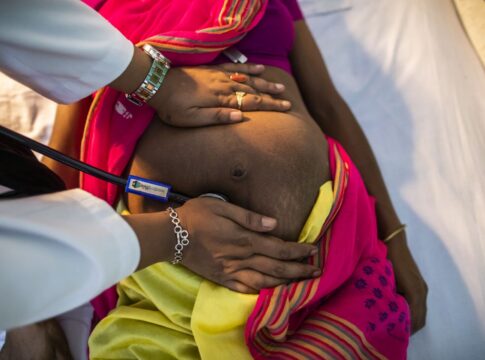
In the days after the Supreme Court’s birthright citizenship ruling, angry posts urging people to call immigration agents on pregnant illegal immigrants turned a complex legal defeat into a raw, viral culture war.
Story Snapshot
- The Supreme Court in Trump v. Barbara firmly upheld birthright citizenship for nearly all babies born on U.S. soil.
- Dissenting and concurring opinions opened a narrow door for future legislative limits on citizenship, which some activists seized on.
- Posts now urge citizens to report pregnant illegal immigrants to Immigration and Customs Enforcement (ICE), despite no legal authority to block “anchor babies.”
- Reports of abuse and medical neglect of pregnant women in ICE detention raise hard questions about harm versus patriotism.
The Supreme Court Decision That Lit the Fuse
The Supreme Court’s ruling in Trump v. Barbara slammed the door on President Trump’s effort to end birthright citizenship by executive order. Chief Justice John Roberts wrote that children born in the United States to parents who are here illegally or only temporarily are still “subject to the jurisdiction” of the United States and citizens at birth under the Fourteenth Amendment. The Court leaned on the 1898 Wong Kim Ark precedent, confirming that soil, not paperwork, decides citizenship for almost everyone born here.
Justice Samuel Alito’s dissent argued that the phrase “subject to the jurisdiction thereof” should focus on “complete allegiance” and allow Congress to treat children of illegal or temporary visitors differently. Justice Brett Kavanaugh’s concurrence agreed the order broke federal law but said it did not break the Constitution, and hinted Congress could rewrite the statute governing citizenship to add narrow exceptions. That small opening was enough for some activists to treat the ruling as a call to arms instead of a final defeat.
From Legal Loss To Online Mobilization
Within hours of the decision, social media feeds on the right filled with posts warning that “anchor babies” would now flood the system and lock in a permanent liberal majority. Influencers told followers that if the Court would not act, “patriots” must, and urged them to call Immigration and Customs Enforcement whenever they saw a pregnant illegal immigrant in a hospital, clinic, or even a grocery store. They framed these calls as lawful help to enforcement, not harassment, despite no statute authorizing citizen reporting to stop birthright citizenship.
Supporters tied their pitch to Trump’s own reaction. He blasted the ruling as “too bad for our country” and warned that the decision could be exploited. They also leaned on historical arguments about Wong Kim Ark, claiming the original case required permanent domicile for citizenship and that modern courts had stretched the meaning beyond what the framers intended. In their telling, citizen reporting was not just legal; it was a way to defend national security and the integrity of American citizenship from judicial overreach.
What The Law Actually Allows
Here is the hard legal truth that often gets buried under the rhetoric. The Supreme Court did not leave room for ordinary citizens to block birthright citizenship through hotline calls. The majority specifically held that children born here to unlawfully present parents are citizens at birth. That makes the very idea of “preventing” anchor babies through reporting a legal dead end. Even if a pregnant woman is detained or deported, if she gives birth on U.S. soil before removal, her child is a citizen under current law.
Kavanaugh’s concurrence matters here. He said Trump’s order violated federal law, not the Constitution, and suggested Congress could pass new rules defining narrow exceptions. That points conservatives toward legislative work, hearings, and statutory reform, not random citizens turning themselves into roaming informants at the maternity ward. Patriotism in this context means pressing lawmakers and building arguments, not improvising a shadow enforcement program that has no legal basis and no clear limiting principle.
The Human Cost Inside ICE Detention
Once you look at what happens to pregnant women in Immigration and Customs Enforcement detention, the moral stakes jump off the page. New policy under Trump ended the general practice of releasing pregnant women, moving toward routine detention instead. Civil rights groups and medical advocates have documented cases where detained pregnant and postpartum women faced poor nutrition, unsafe conditions, and denied prenatal care. One report describes women restrained during transport and placed in solitary confinement while pregnant.
Women’s Refugee Commission and Physicians for Human Rights found Immigration and Customs Enforcement failed to follow its own rules on keeping families together and asking about children at arrest. A letter to Congress from advocates urged Immigration and Customs Enforcement to identify and release all pregnant, postpartum, and nursing individuals because detention itself posed serious health risks. Senate Democrats formally demanded a report on mistreatment of pregnant women in Immigration and Customs Enforcement custody, a rare sign that systemic abuse concerns reached the highest levels of government.
Conservative Values: Security, Law, And Basic Decency
For many conservatives, the instinct to “do something” about illegal immigration is real and honorable. National borders matter. Citizenship should not be a loophole prize for gaming the system. But American conservative values also stress ordered liberty, equal justice, and respect for human dignity. No serious right-of-center tradition says you defend the Constitution by pushing frightened pregnant women into a detention system with a record of neglect and abuse.
There is a difference between firm enforcement and reckless cruelty. Reporting violent criminals, drug traffickers, or cartel members aligns with public safety and common sense. Singling out pregnant women for surveillance because a Supreme Court ruling frustrated you crosses a line. It weaponizes fear against a group that cannot fight back and produces no real legal gain. The law still grants citizenship to babies born here. The only clear result of these calls is more suffering inside facilities that already struggle to provide basic medical care.
Where Serious Work Should Happen Next
If Americans want to revisit birthright citizenship, the path runs through Congress and serious legal debate, not viral outrage. Lawmakers can hold hearings, study data on births to noncitizen parents, and debate whether narrow, clearly defined exceptions make sense. They can weigh national security concerns against the risk of creating a caste of stateless children. That is slow, boring work, but it is also the kind of constitutional politics the framers expected when they wrote the Fourteenth Amendment.
Meanwhile, citizens who care about both border security and basic decency can choose better targets for their energy. They can demand that Immigration and Customs Enforcement follow its own pregnancy directives, insist on safe medical care in detention, and press for faster, fairer immigration courts. That is not weakness. It is the tough, adult version of patriotism: enforcing the law while refusing to abandon our commitment to human dignity, even when politics turn loud and ugly.
Sources:
thegatewaypundit.com, en.wikipedia.org, youtube.com, cfr.org, supremecourt.gov, americanimmigrationcouncil.org, pmc.ncbi.nlm.nih.gov, womensrefugeecommission.org, afsc.org