

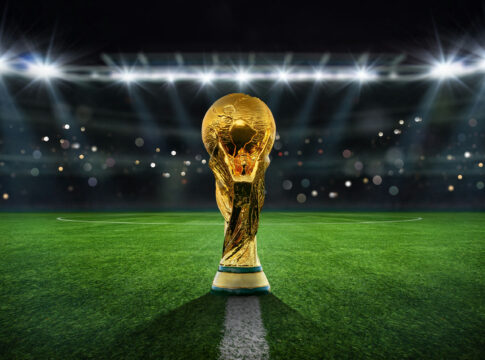
The 2026 World Cup is giving millions of visitors a front‑row seat to a very different America than the one they thought they knew.
Story Snapshot
- Fans are flocking to U.S. host cities and leaving with warmer views of America’s people and culture.
- Huge headline numbers mask a key truth: the World Cup barely moves U.S. GDP, but it transforms local city life.
- America’s hospitality, infrastructure, and everyday “Americana” are becoming the real winning story for foreign visitors.
- The tournament exposes a split between glossy economic promises and what history shows mega‑events usually deliver.
World Cup visitors are discovering an America they did not expect
World Cup visitors are landing in cities like Los Angeles, Atlanta, and Kansas City and reporting something simple but powerful: Americans are kinder, more welcoming, and more normal than the headlines back home claim. Local news clips show fans praising how strangers help with directions, how families bring kids to fan zones, and how police and event staff keep order without feeling heavy‑handed. This on‑the‑ground experience cuts against years of foreign media stories that paint America as angry, divided, or dangerous.
Fans are also surprised by how easy everyday life feels. They see clean transit hubs, working airports, and food options from around the world on one city block. Kansas City’s visitor interviews highlight strong coordination between stadiums, fan fests, and public transportation, with a soccer researcher rating it the best overall organization among host cities. These details do not sound dramatic, but they matter. Tourists judge countries by simple questions: Was it safe? Was it easy? Were people decent? The United States is quietly scoring high.\
Huge economic promises hide a small national impact and big local stakes
FIFA’s own socioeconomic impact report projects 185,000 full‑time jobs in the United States and $17.2 billion in added gross domestic product over several years. A separate Micronomics study for Los Angeles County estimates up to $594 million in total impact, including $343 million in direct visitor spending and about $35 million in extra local tax revenue. Bank of America card data shows consumer spending in 16 host cities up over six percent, with tourist spending rising much faster. On paper, this looks like a major win for workers and businesses.
Yet serious analysts stress that these numbers barely move the needle for a $27 trillion national economy. Saxo Bank and S&P Global both describe the World Cup as a “macro event with micro impacts,” noting that even a $17 billion boost is less than a tenth of a percent of U.S. output. The main effect is not some new national boom but a short, sharp surge in hotels, restaurants, and local transport in a handful of cities. For a conservative, common‑sense lens, that matters: we are not talking about Washington solving economic problems from the top down. We are talking about small businesses getting a few very good weeks.
History warns that big event projections rarely match real‑world results
Independent research on past mega‑events shows a consistent pattern. Pre‑event impact studies, often funded by organizers or local boosters, forecast huge gains; post‑event data usually finds effects that are “insignificant or an order of magnitude less” than claimed. Studies of Super Bowls, Olympics, and past World Cups show little change in taxable sales and far smaller job gains than promised. Another global review notes that host countries often shoulder large public costs while event bodies like FIFA walk away with the bulk of direct revenue. That is a classic case of private profit and public risk.
The 2026 tournament appears to fit this pattern. Fortune reports that host cities could face a collective shortfall of around $250 million while FIFA collects close to $9 billion in revenue, thanks to contract terms that leave local taxpayers paying for security, transit, and stadium retrofits but grant FIFA ticket and media income. University of Toronto research, cited in recent videos, finds that most past World Cups produced net losses for host cities once full costs are counted. None of this disproves every local benefit, but it does challenge the idea that the World Cup is some magic national investment that “pays for itself.”
America’s real gains are cultural, reputational, and bottom‑up
For the United States, the payoff looks less like a giant budget windfall and more like a reputational reset. S&P Global concludes the World Cup is “more likely to be a significant cultural event than a national economic game changer”. That line fits what fans themselves are saying in interviews: they talk about feeling safer than expected, enjoying American food culture, and being impressed by the scale and reliability of U.S. infrastructure in major cities. These are soft power gains, but they are not soft in impact. They affect how future tourists, students, and investors view America.
Here is the full Round of 32 for the #FIFA World Cup 2026
🇧🇪 Belgium vs 🇸🇳 Senegal
🇺🇸 U. S. A vs 🇧🇦 Bosnia & Herzegovina
🇪🇸 Spain vs 🇦🇹 Austria
🇵🇹 Portugal vs 🇭🇷 Croatia
🇨🇭 Switzerland vs 🇩🇿 Algeria
🇦🇺 Australia vs 🇪🇬 Egypt
🇦🇷 Argentina vs 🇨🇻 Cape Verde
🇨🇴 Colombia vs 🇬🇭 Ghana https://t.co/3SgRt7gChK— توقیر فاروق 🇵🇰❣️ (@HumTum_Official) June 28, 2026
Common‑sense conservatives should see both sides clearly. On one hand, local businesses, workers, and city brands are getting real short‑term wins. On the other hand, history and current contract structures show that taxpayers often carry the long‑term bill while distant institutions reap most of the direct cash flow. The smart stance is not to reject the World Cup or worship it. It is to demand transparent audits of city costs, resist regulatory capture in stadium and transit deals, and measure success by what fans actually experience: safety, freedom, opportunity, and an America that feels better than its worst headlines.
Sources:
cbsnews.com, partnersrealestate.com, forbes.com, facebook.com, nytimes.com, supplier.io, reddit.com