

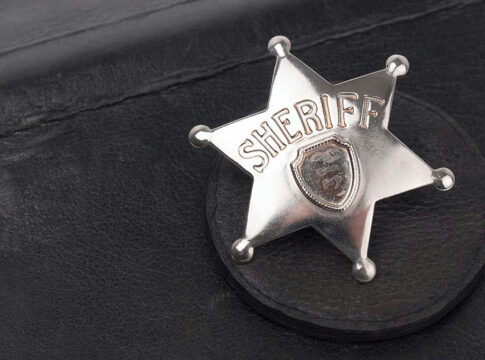
A man’s online death threat against a county sheriff — paired with a plea for “full presidential immunity” from Donald Trump — shows how fringe violence and elite power now collide in America’s justice system.
Story Snapshot
- Maricopa County deputies arrested Jose Angel Valadez after he allegedly posted direct threats to kill Sheriff Jerry Sheridan on X.
- Police say Valadez asked President Trump for “full presidential immunity” while making the threats, echoing recent Supreme Court battles over presidential power.
- The sheriff’s office has not released the actual posts, forcing the public to rely on law enforcement and media claims without seeing key evidence.
- The case highlights a wider surge in online threats against officials and deep public distrust of how both government and elites use “immunity” and power.
What Police Say Happened in Maricopa County
Maricopa County Sheriff’s Office officials say 30-year-old Jose Angel Valadez posted direct threats on the social media platform X on July 1, 2026, saying he would kill Sheriff Jerry Sheridan. Investigators report that in those same posts, Valadez asked President Donald Trump for “full presidential immunity” while making the threats. The agency’s Threat Management Unit tracked Valadez down that day and arrested him on suspicion of threatening and intimidating, a serious charge under Arizona law. The next day, the sheriff’s office publicly confirmed his arrest and name in a post on its own X account.
News outlets in Arizona and national sites repeated the sheriff’s account. Local reports stressed that Valadez’s alleged promise to kill Sheridan was specific and personal, not a vague rant. Media coverage also focused on his request for protection from Trump, tying the case to recent fights over presidential immunity. Together, these details helped turn what might have been a local crime story into a national talking point about violent threats, politics, and the reach of presidential power. But the core facts all still rest on what police say they saw online.
What We Still Do Not Know About the Threats
So far, the public has not seen the actual X posts that led to Valadez’s arrest. The Maricopa County Sheriff’s Office did not release screenshots or full text of the threats in its news releases. Reporters and social media pages are quoting the sheriff’s office, not the original posts. That means the death threat and “full presidential immunity” request remain secondhand claims. If X removed the posts or if Valadez deleted them, outsiders cannot easily verify what was said. This lack of direct evidence feeds distrust among people who already question law enforcement and media narratives.
The exact Arizona statute used for the “threatening and intimidating” charge has also not been cited in public statements. Under both federal and state law, making serious threats against government officials can be a felony. But without a charging document, the public cannot see precisely how prosecutors say Valadez broke the law or how they link specific words to a crime. Civil liberties groups often warn that when agencies ask the public to “trust us” on unseen speech evidence, it opens the door to overreach and selective enforcement. Here, the gap between what police claim and what citizens can verify is wide.
Presidential Immunity, Trump, and Why This Phrase Matters
The strangest detail in this case is Valadez’s alleged plea for “full presidential immunity” from Trump while threatening a sheriff. That phrase did not appear out of nowhere. In 2024, the Supreme Court ruled in Trump v. United States that presidents have broad immunity from criminal charges for many “official acts,” and even absolute immunity for a core set of powers. The American Civil Liberties Union warned that the decision “freed presidents to use their official powers to engage in criminal acts substantially free of accountability.” That ruling shook Americans on both left and right, who already feared that powerful leaders play by different rules.
By 2026, Trump is in his second term and Republicans control Congress, while many conservatives still complain about past liberal “woke” and globalist policies and many liberals fear Trump’s “America First” agenda. Both sides, however, share a deeper worry: that elites and the so-called “deep state” bend the system for themselves. When an everyday person like Valadez repeats the language of “presidential immunity,” even in a violent and unlawful way, it shows how these court fights filter down into street behavior. The idea that a leader can be “above the law” has moved from legal briefs into the minds of unstable citizens looking for a shield.
Rising Threats Against Officials and Public Distrust
This arrest is part of a growing wave of threats against public officials across the country. Research on federal cases shows that yearly charges for threatening officials almost doubled between the mid-2010s and the early 2020s. Analysts also found that violent online rhetoric aimed at top officials more than tripled between 2021 and 2025. One dashboard tracking violence reports that threats against local public servants have jumped over 2,000 percent since 2015, with threatening statements far more common than physical attacks. Law enforcement now treats online threats as real dangers, not just ugly talk.
At the same time, confidence in democracy and in the fairness of the justice system has fallen. Many Americans believe officials care more about reelection and protecting their own than solving everyday problems like rising costs, crime, and immigration chaos. Conservatives see overreach in speech policing and question whether law enforcement applies rules evenly. Liberals worry about abuses of presidential power and think some officials face no consequences at all. When police hide key speech evidence and the Supreme Court broadens immunity for presidents, it feeds these shared fears that the system shields the powerful while cracking down on the powerless.
Why This Case Should Matter to Ordinary Americans
The Valadez case is, on its face, simple: a man is accused of making a specific death threat against a sheriff, which is illegal and dangerous. If the evidence is as strong as police say, most Americans would agree there should be consequences. But the way this case has been handled also raises bigger questions. Citizens are asked to accept law enforcement claims about online speech they cannot see. Courts have granted presidents broad protection that many think goes far beyond what the founders intended. And a troubled man echoes that elite legal language while allegedly calling for violence.
For people on both the right and the left who believe government is failing them, this mix of hidden evidence, rising threats, and expanded immunity looks like one more sign that the rules are warped. It shows how harsh talk online can turn into criminal cases, even as powerful leaders gain new shields from accountability. Whether you fear abusive police or unaccountable presidents, the common demand is the same: clear evidence, fair laws, and a system that protects people equally instead of serving the interests of the rich and the connected.
Sources:
mediaite.com, fox10phoenix.com, azcentral.com, x.com, facebook.com, aclu.org, journals.law.harvard.edu, theusconstitution.org, supremecourt.gov, brennancenter.org, harvardlawreview.org, en.wikipedia.org