

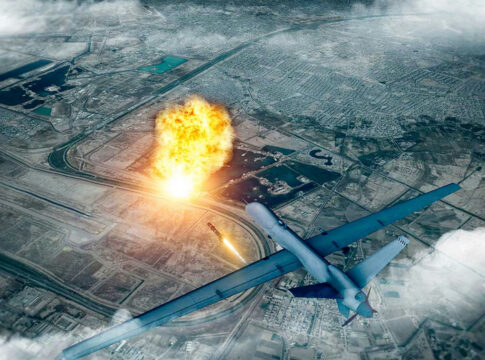
A Middle East missile showdown has put President Trump in the crosshairs of history as he demands both Israel and Iran “stop shooting” even while Tehran keeps firing and Jerusalem pushes back against terror.
Story Snapshot
- Iran launched fresh ballistic missiles at Israel after earlier Israeli strikes on Hezbollah targets in Beirut, shattering months of fragile calm.[1][2][4][8]
- Israel responded by striking what it described as military targets in western and central Iran, framing the operation as defensive retaliation.[3][4][7][9][11]
- President Donald Trump publicly urged both sides to halt hostilities immediately and privately pressed Prime Minister Benjamin Netanyahu not to retaliate.[1][2][3][9]
- Ongoing exchanges risk dragging America deeper into conflict, rattling global oil markets and testing Trump’s promise to avoid endless wars.[3][6][10]
Missile Salvos Shatter a Fragile Ceasefire
Iran reignited open warfare by firing waves of ballistic missiles at northern Israel, its first direct strikes since an April ceasefire that followed months of bloody conflict.[1][3][4][7][8] Reports describe multiple salvos aimed at Israeli territory, largely concentrated in the north, with air raid sirens sending civilians scrambling to shelters.[1][3][8] Israeli officials say most incoming missiles were intercepted and no serious casualties reported, though early damage assessments remain incomplete and contested.[3][7] Iran’s Revolutionary Guard boasted the barrage was only the beginning of a week of continuous attacks.[7][9]
Tehran insists its missile attacks are retaliation for Israeli airstrikes on suspected Hezbollah sites in Beirut’s southern suburbs, where Israel says Iran’s terror proxy was embedding itself in civilian neighborhoods.[2][3][4][8][11] Iranian leaders claim they are answering “Zionist aggression,” but this comes on top of a long record of Iranian missile and drone strikes on Israeli cities since the broader 2026 Iran war began.[4][7][11] Conflict trackers note hundreds of earlier Iranian missile launches, many carrying cluster munitions that spread shrapnel across Israeli population centers and critical infrastructure.[6][7][11]
Israel Hits Back Inside Iran’s Heartland
Within hours of the new Iranian barrage, the Israel Defense Forces announced strikes on what it called military targets in western and central Iran, including areas around key cities where Iranian bases and launch facilities are believed to operate.[3][4][7][9][10][11] Israeli military briefings and regional reporting describe attacks on installations tied to Iran’s missile program and broader war machine, rather than on civilian infrastructure.[3][7][10][11] Analysts argue such strikes are designed to degrade Iran’s ability to keep firing at Israeli cities while sending a clear message that attacks on Israeli civilians carry real costs.[4][7][9]
Israeli and Western experts also connect these operations to a wider effort to roll back Iran’s nuclear and missile capabilities, which have advanced despite years of sanctions and diplomacy.[1][4][9] Prior phases of the war featured Israeli and United States strikes on Iranian nuclear and military sites, attempts to curb a regime that openly threatens to erase Israel from the map.[4][7][11] At the same time, independent verification of every site hit in this latest round remains limited, since active conflict and tight regime control make access to strike locations inside Iran extremely difficult for outside reporters.[1][3][9]
Trump’s Stop‑Shooting Demand and American Interests
President Donald Trump responded to the escalating exchange by demanding that both Israel and Iran “immediately stop shooting,” warning that continued missile fire risks dragging the United States and the entire region into a wider war that Americans do not want.[3] According to Axios and Israeli live reports, Trump phoned Prime Minister Benjamin Netanyahu urging him not to launch retaliatory strikes, arguing that both sides had already traded blows and that further escalation would threaten promising diplomacy with Tehran.[1][2][3][9]
Israel said it struck military targets in western and central Iran. The strikes come after it intercepted missiles that Tehran fired, according to Israel.https://t.co/wNuLiy7iV1
— ABC 13 News – WSET (@ABC13News) June 8, 2026
Trump has publicly claimed the Iranian barrage caused no serious harm and emphasized that Washington is “very close” to a potential deal he believes could restrain Iran’s behavior without another long, draining war.[2][3][9] Israeli sources, however, signaled that while they respect the American request, they reserve the right to respond to Iranian aggression, even if on a delayed timeline.[1][2] That tension highlights a familiar divide: a U.S. president focused on avoiding broader war and stabilizing oil markets, and an American ally living under direct missile threat, unwilling to gamble its survival on paper promises from a hostile regime.[1][3][6][10]
High Stakes for Security, Oil, and Constitutional Priorities
Global markets reacted nervously as reports of Israeli strikes inside Iran and renewed Iranian barrages fueled fears of wider conflict, with oil analysts noting price spikes on news of fresh attacks and threats to key shipping lanes.[3][6][10] Energy volatility hits American families directly through fuel and heating costs, a painful reminder that instability created by radical regimes abroad can undo hard‑won progress on lowering inflation at home.[3][6] Strategic briefings warn that if fighting spreads to vital chokepoints such as the Strait of Hormuz or the Bab al‑Mandeb Strait, supply chains and consumer prices could take another heavy blow.[3][6]
Policy experts caution that early wartime narratives often lean heavily on government statements before independent facts catch up, allowing Iran and its media allies to paint defensive Israeli actions as “escalation” while downplaying years of Iranian proxy terror and missile attacks.[1][3][8][9][11] That information fog matters for American conservatives who value a strong national defense and constitutional checks on war‑making power: they want clear facts before any deeper U.S. involvement.[11] As Trump presses for de‑escalation and a negotiated outcome, many on the right will watch closely to ensure any Iran deal truly curbs terror and nukes without sacrificing Israel’s security or dragging American taxpayers into another open‑ended Middle Eastern quagmire.[2][3][4][7][9]
Sources:
[1] YouTube – Israel hits Iran with new strikes despite Trump warning
[2] Web – Iran Update Special Report, June 7, 2026
[3] Web – IDF says it expects several days of fighting against Iran; PM holds …
[4] Web – Live updates: Israel and Iran trade strikes, imperiling already …
[6] Web – Israel strikes Iran by June 30, 2026? – Polymarket
[7] YouTube – Oil Jumps After Israel Strikes Iran; AI Rally Cools
[8] YouTube – Israel strikes Iranian military targets hours after Tehran launched …
[9] YouTube – Israel and Iran Trade Missile Attacks, Jeopardizing Peace Talks
[10] YouTube – On The Hour – June 7, 2026 | Iran War Hits 100 Days
[11] Web – IDF confirms targets struck in western, central Iran